


Hort
Services:
- WooCommerce development
- ERP and CRM integration
- Multilingual catalog (WPML)
- Performance engineering
- Custom theme
Industry:
- Automotive parts · B2B distribution
Technology:
- WordPress
- WooCommerce
- WPML (EN · UA · DE · RU)
- Custom synchronization plugin
- Minimal plugin footprint
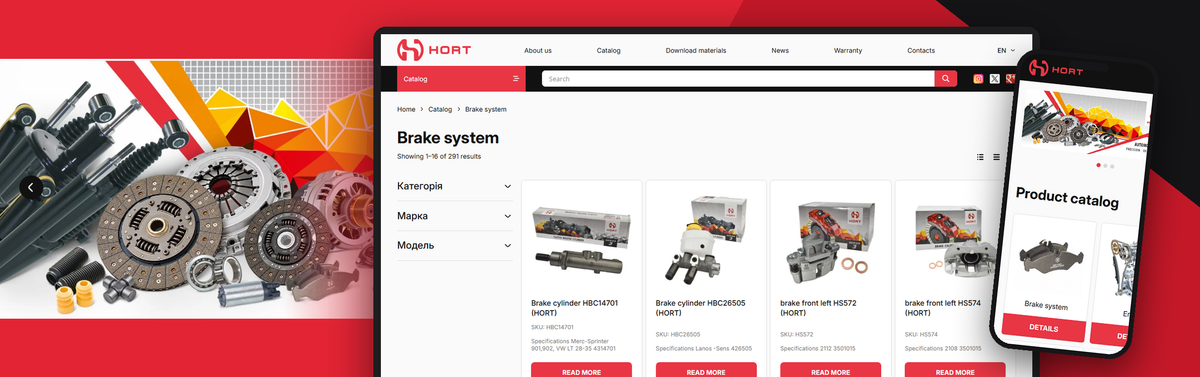
A mechanic in Lviv opens hort.ua on his phone at the counter and finds a rear brake drum by its LADA number. A distributor in Leipzig filters the same catalog in German. Your sales manager answers the quote request that landed in the CRM a minute ago. Nobody typed any of this into WordPress: the site is the ERP, rendered for the web. See it live at hort.ua.
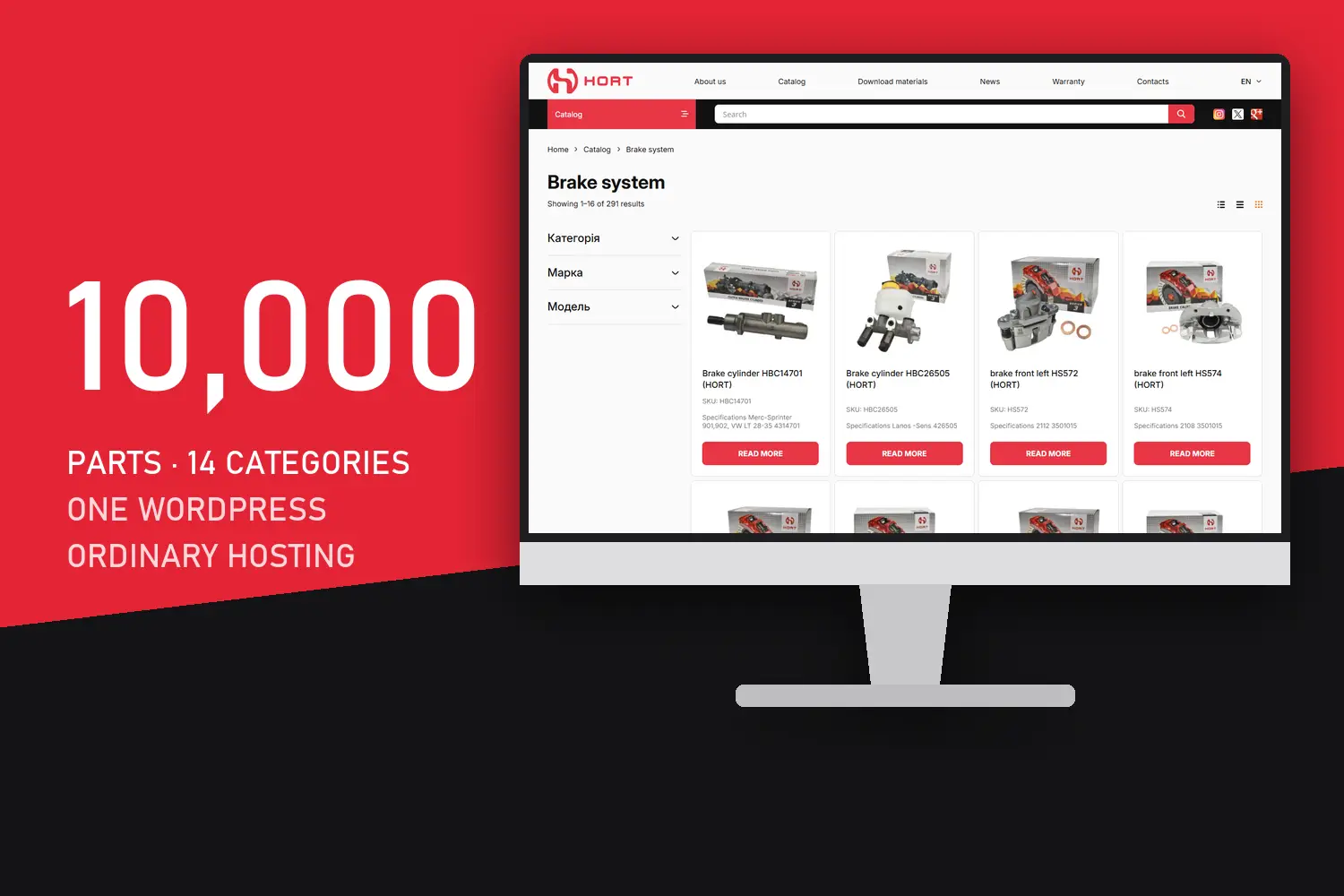
10,000 parts on a hosting plan you can buy with a credit card. Most WooCommerce stores of this size end up on managed enterprise hosting because the stack behind them is heavy: a page builder, a dozen plugins for filters, search and languages, and a database nobody has tuned. Hort runs on a standard shared plan. The theme is custom, the plugin list is short, and the catalog, 14 categories and roughly 10,000 items, is organized and indexed so category pages and search stay quick under real traffic. Google PageSpeed lands in the yellow-green range, which for a four-language store of this size on ordinary hosting is the result that matters.
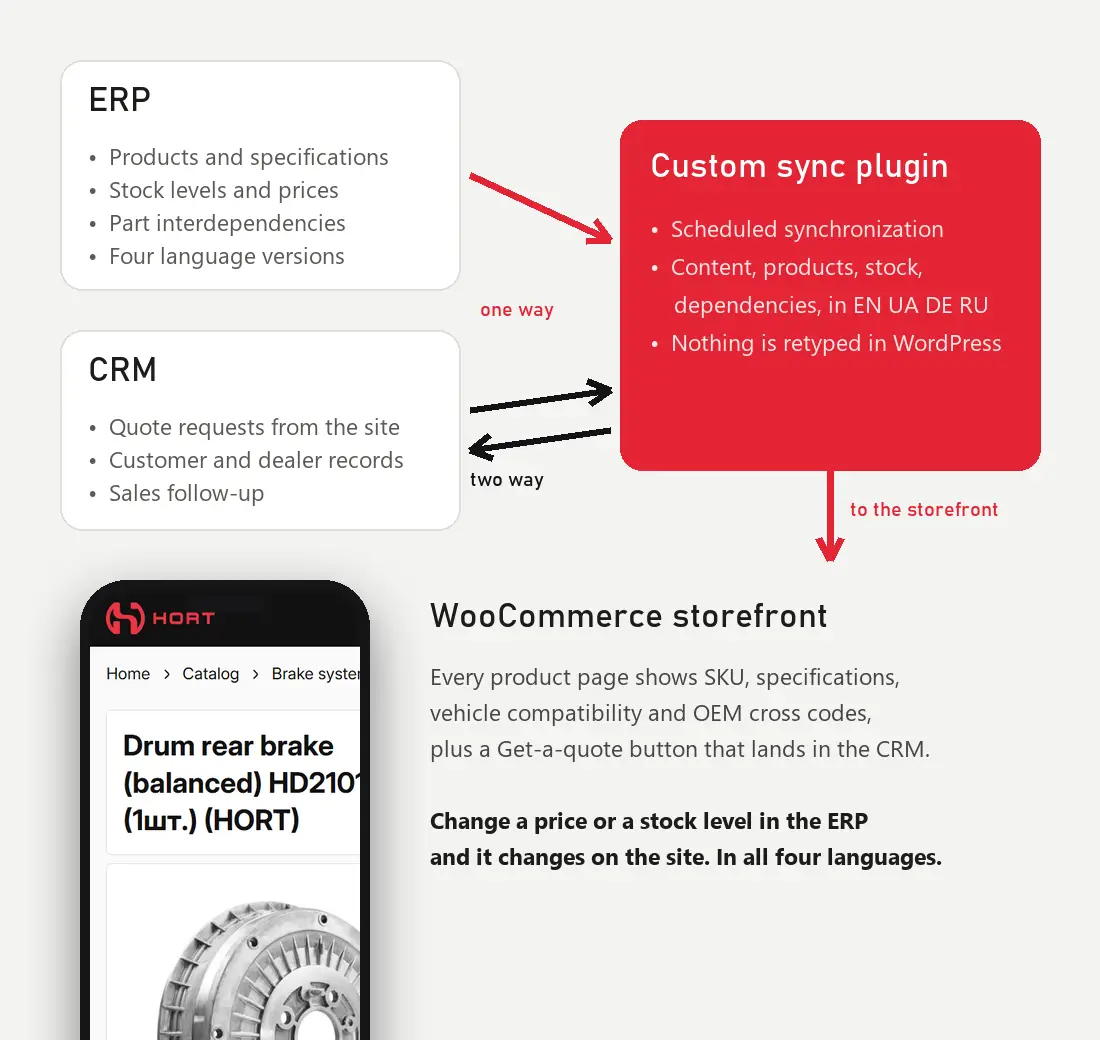
The website never argues with the ERP. A custom synchronization plugin keeps WooCommerce aligned with Hort’s ERP and CRM: products and specifications, stock levels, prices, part interdependencies and the content behind them, in all four languages. Quote requests travel the other way, from the product page straight into the CRM where the sales team already works. Change a stock level in the ERP and it changes on the site. Nobody maintains two catalogs, and nobody retypes anything.
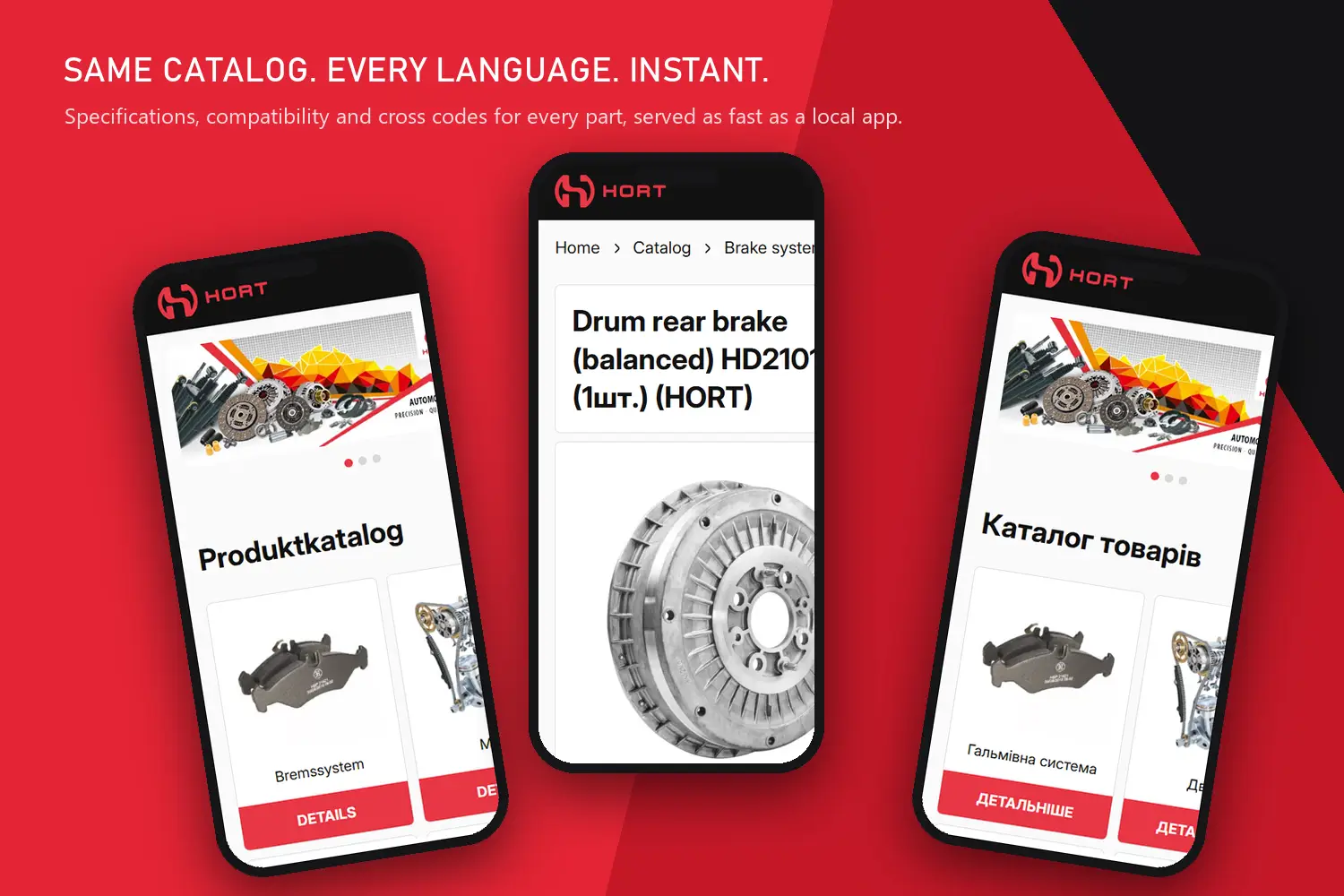
Rich data, instant feel. Each part is not a name and a price. It carries a specification line, a vehicle-compatibility table by brand, model and modification, a cross-code table of OEM numbers and its links to related parts, in four languages. That is a heavy data model for any store. On Hort it is invisible: pages open and filters respond as if the catalog were sitting on the device. The engineering that makes that true, a lean theme, clean queries and a disciplined plugin footprint, is exactly what you do not see.
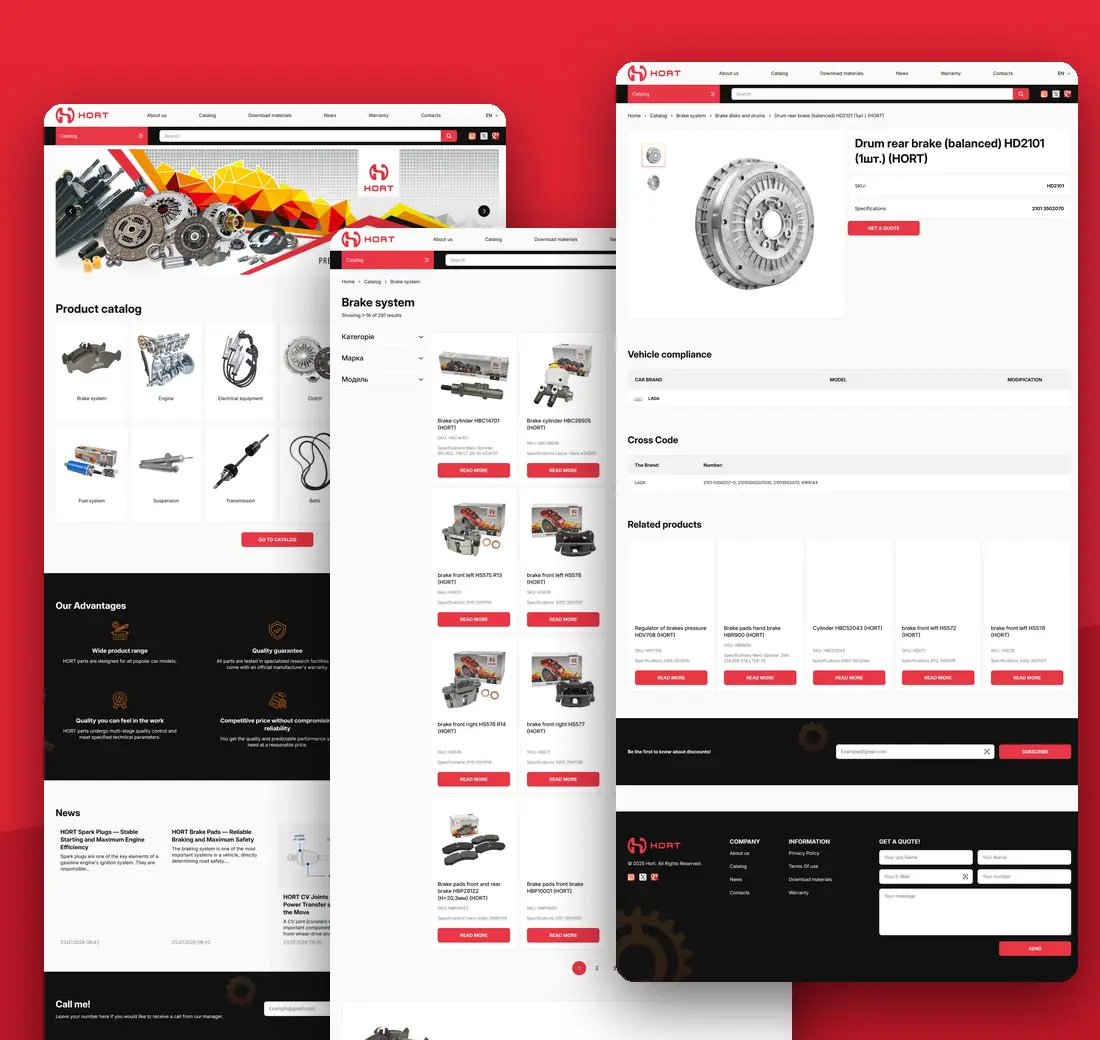
Every page, every language, one install. Home, category and product pages share the same discipline: brand artwork up top, the catalog within one tap, filters a mechanic actually uses, and a quote button instead of a cart, because that is how parts are bought in B2B. EN, UA, DE and RU are the same installation, so the twelfth category tile in German is the twelfth category tile in Ukrainian.
If this sounds like your business: your catalog lives in an ERP, your buyers live on their phones and your current store is held together by plugins. We build the version that behaves like the warehouse, on hosting you already pay for.
Let's get started!

Awesome!
We’ll be right back for a good talk.
Cheers ?
